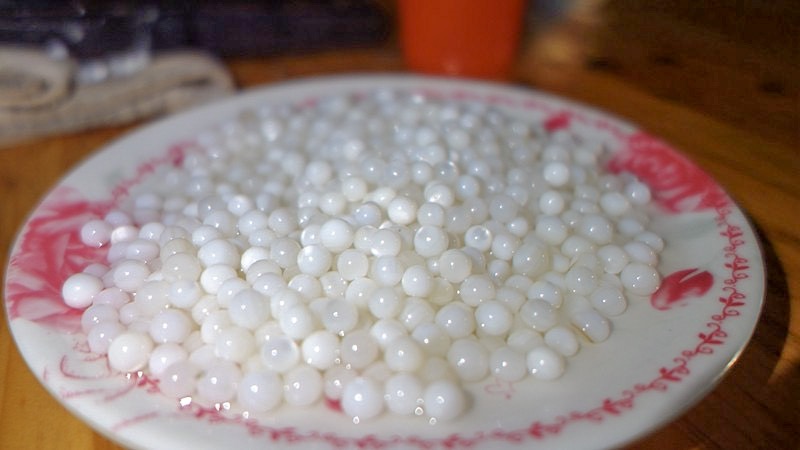
1. How Pearls Are Formed
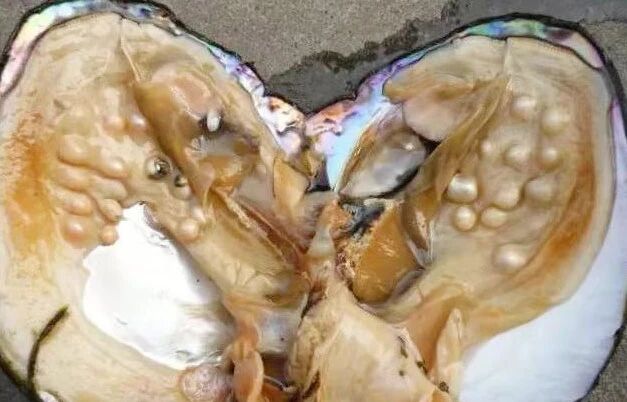
Pearls originate inside bivalve mollusks such as oysters or freshwater mussels. When the shell opens and closes, small irritants may enter the soft tissue—these can be grains of sand, tiny parasites, or other foreign particles.
To protect itself, the mollusk’s mantle tissue creates a protective sac (called a pearl sac) around the intruding object. Mantle epithelial cells inside this sac begin secreting nacre (calcium carbonate + organic material). Layer after layer builds up, eventually forming a pearl.
- If the pearl sac becomes fully enclosed within the mollusk’s body, a free pearl forms.
- If the sac is only partially embedded in the mantle tissue, the pearl grows attached to the shell, producing a blister pearl.
This natural defense mechanism is the foundation of both natural and cultured pearls.
2. Nucleated vs. Non-Nucleated Pearls
Modern pearl farming uses two different cultivation techniques. Both methods rely on the mollusk’s ability to produce nacre, but the process—and the characteristics of the finished pearl—are different.
✔ Nucleated Pearls (Bead-Nucleated)
These pearls are created when a technician surgically implants:
- A round shell-based bead nucleus
- A small graft of mantle tissue
The mollusk treats the implanted bead as a foreign object and coats it with nacre, forming a pearl.
✔ Non-Nucleated Pearls (Tissue-Nucleated)
In freshwater pearl farming, no bead nucleus is used. Instead:
- A tiny piece of donor mantle tissue is inserted into the mollusk’s connective tissue.
- The tissue graft stimulates nacre secretion.
- The entire pearl is composed of solid nacre.
Key Differences
Nacre Thickness
- Non-nucleated pearls: 100% nacre → thicker layers, more durable, long-lasting luster.
- Nucleated pearls: nacre builds around a bead → thinner nacre layers.
Luster
- Luster depends on nacre quality, not the nucleation method.
- Sea pearls generally have sharper luster than freshwater pearls.
Shape
- Non-nucleated pearls are harder to control → perfect rounds are rare.
- Nucleated pearls have a pre-formed round nucleus → higher roundness rate.
Size
- Tissue-nucleated pearls grow naturally → sizes vary widely.
- Nucleated pearls usually grow larger than the bead nucleus implanted.
3. The Pearl-Culturing Process
Whether cultivating saltwater or freshwater pearls, pearl farms follow four essential stages:
broodstock preparation, surgical implantation, grow-out (suspended culture), and harvesting.
Step 1: Hatchery & Broodstock Preparation
Before cultivation, pearl oysters or mussels must be raised for 2–3 years.
Once they grow to about 7–9 cm, they are ready for surgical implantation.
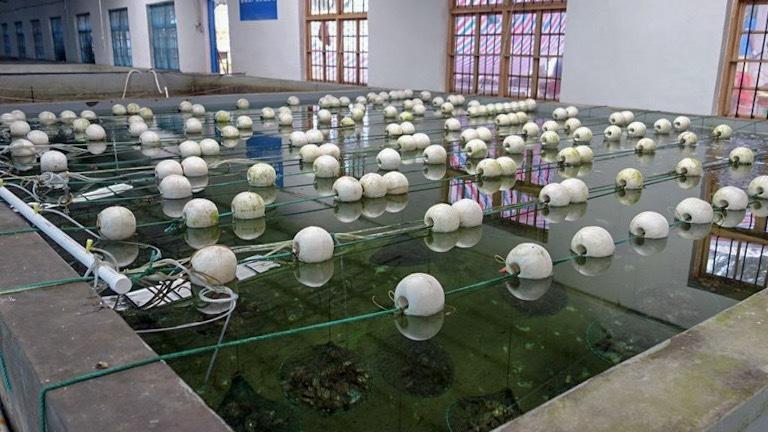
Step 2: Surgical Nucleation
Healthy mollusks are selected for the operation.
There are two categories:
- Operation mollusks – receive the bead nucleus
- Donor mollusks – provide mantle tissue grafts
For non-nucleated pearls
Only small grafts of mantle tissue are used.
For saltwater (nucleated) pearls
Technicians implant:
- A bead nucleus (typically made from shell, but sometimes ceramic or resin)
- A piece of donor tissue, which determines nacre color
Typical implantation quantities:
- Freshwater pearls: 30–40 grafts per mollusk
- Saltwater pearls: 1–2 bead nuclei per oyster
After the operation, the mollusks undergo:
- Wound treatment
- Disinfection
- A healing period of about one month before returning to the water
The implantation season is usually March–June and September–November, when survival rates are highest.
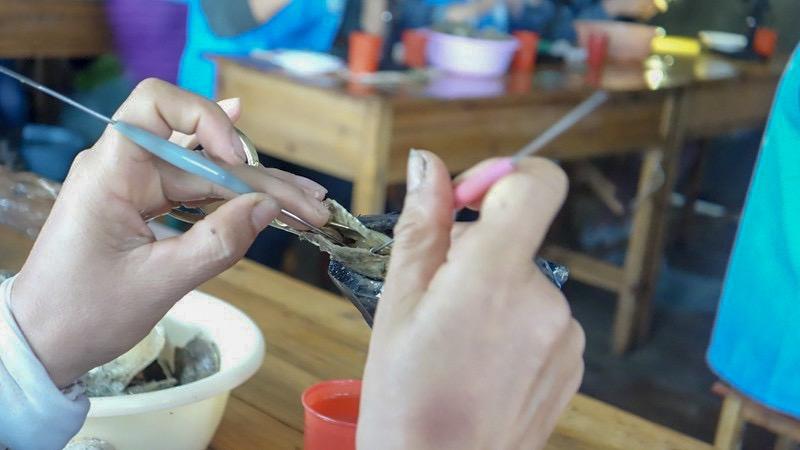
Step 3: Suspension Culture (Grow-Out)
Mollusks are placed back into clean water for long-term cultivation.
Freshwater pearls:
- Water depth should be at least 1 meter
- Muddy or sandy bottoms are ideal
- Suspension depth varies by season:
- Winter: ~35 cm below the surface
- Spring/Fall: ~20 cm
Growth Periods:
- Nucleated pearls: 1–2 years
- Non-nucleated pearls: 4–5 years
During this stage, farmers must closely monitor:
- Water temperature
- Weather changes
- Water quality
- Food availability
These factors directly influence the luster and overall quality of the pearls.
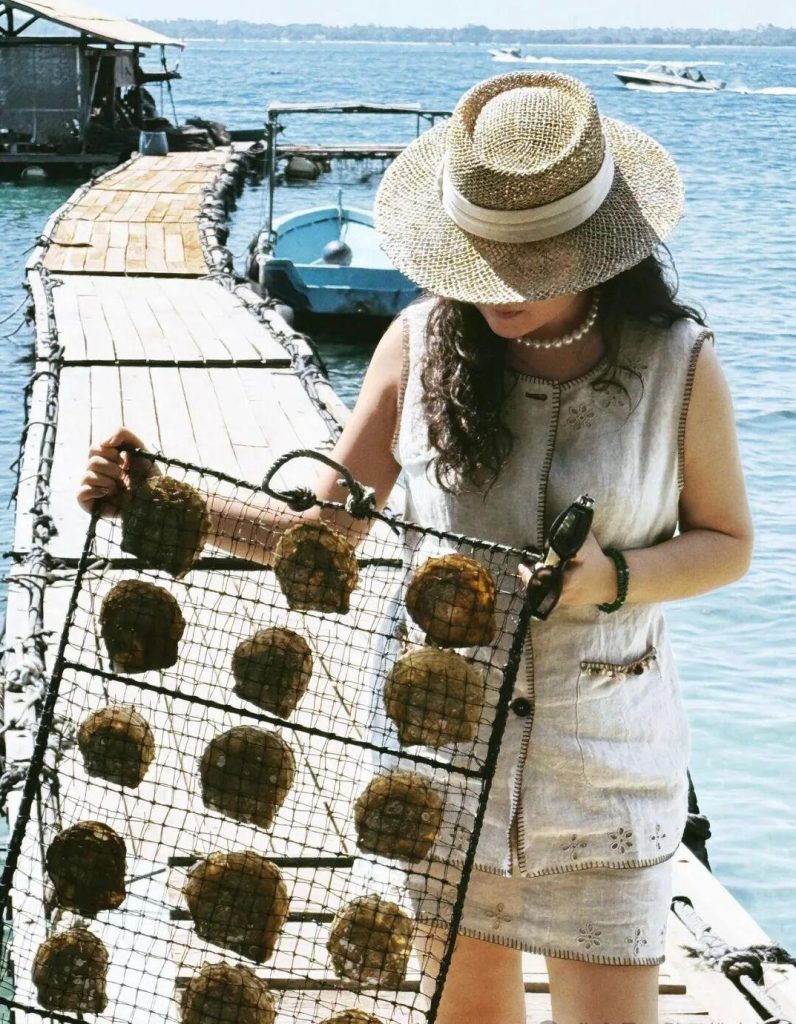
Step 4: Harvesting
Pearls are harvested from November to February, when water temperatures drop below 20°C.
Why winter is ideal:
- Cooler temperatures → slower nacre deposition
- Slower growth produces smoother nacre layers
- Resulting pearls display better luster and finer nacre texture
Harvesting during hot seasons is avoided because:
- Nacre deposits too quickly
- Surface becomes hazy and dull
- Pearl quality decreases