
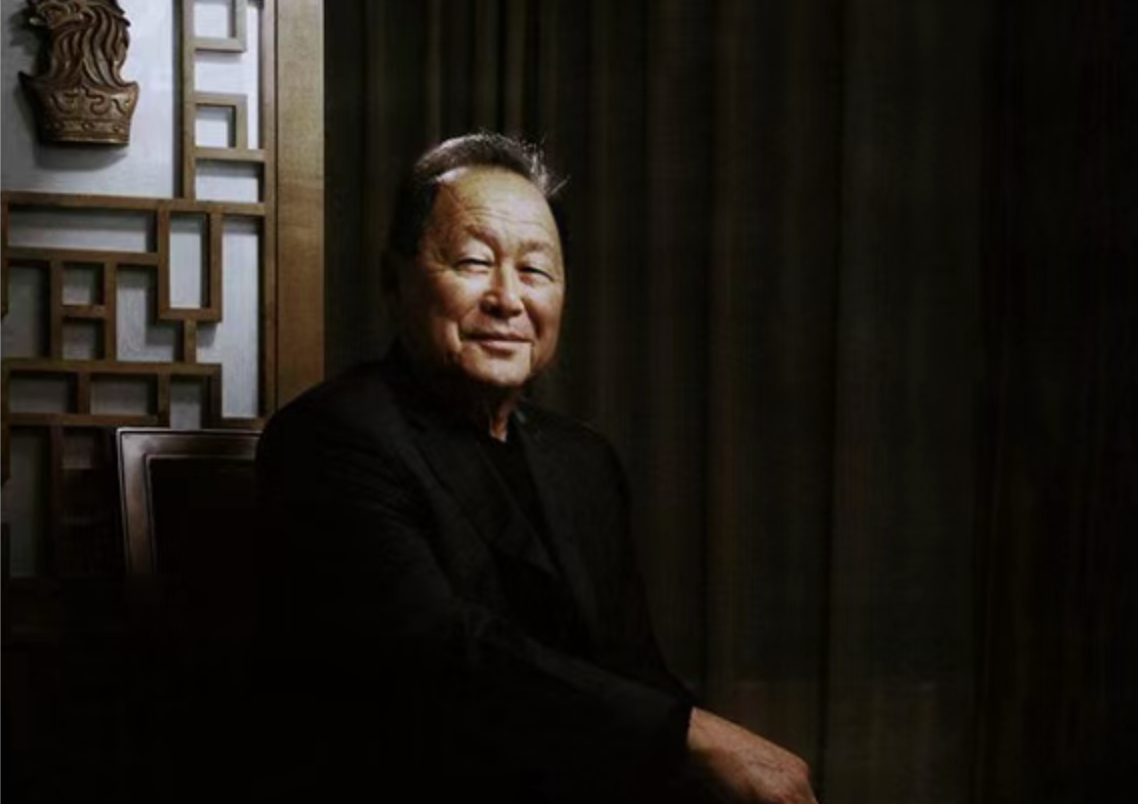
Robert Wan is widely recognized as the father of the modern Tahitian pearl industry and one of the most influential figures in the global pearl market. A pioneer of large-scale black pearl cultivation in French Polynesia, he is also regarded as one of the world’s largest pearl producers and exporters.
At the height of his career, Robert Wan owned eight major pearl farms across Tahiti and established brand agencies and distribution networks throughout Europe, Japan, and Hong Kong, helping bring Tahitian black pearls onto the world stage.
From Humble Beginnings to Global Recognition
Born in 1934, Robert Wan was the seventh of eleven children. His early life was marked by poverty. His family lived in a fragile tin-roofed house, and during heavy rains, they had to move furniture through the night to avoid leaks. With no money for animal feed, the children collected discarded vegetable leaves from local markets to raise chickens. To earn pocket money, they sold sweets outside movie theaters.
Looking back on those years, Wan once said with a smile:
“Life was difficult, but it was also happy.”
At the age of 19, after the sudden death of his father, Wan was forced to leave school and become the primary breadwinner for his family. He took on every job he could find—messenger, accountant, salesman—never turning down an opportunity to work or learn.
Failure Before Breakthrough
In his forties, Wan partnered with friends to invest in a hotel project in Japan. Unfortunately, the global oil crisis halted construction, and the investment was completely lost. While staying in Japan during this difficult period, he encountered pearl farms for the first time—an experience that would change his life.
Inspired, Wan returned to Tahiti to study the pearl cultivation industry. He acquired a pearl farm and began learning everything from scratch—researching, experimenting, and investing continuously. After three years of relentless effort, his pearls still failed to meet the strict standards of Japanese jewelry companies and were sold at low prices, resulting in heavy losses.
As if that weren’t enough, six typhoons struck Tahiti in 1983, devastating the islands and destroying much of the infrastructure.
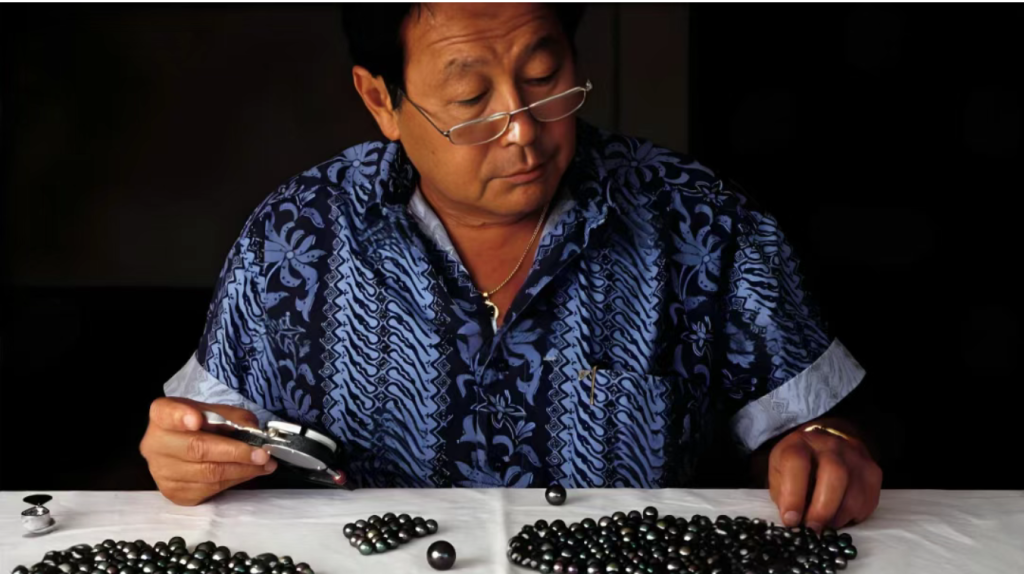
Tahiti: Nature’s Perfect Pearl Sanctuary
Tahiti lies northeast of New Zealand and south of Hawaii, over 5,000 kilometers from Australia. Its isolation has preserved an unpolluted, pristine marine environment, making it one of the most ideal locations in the world for pearl oyster cultivation.
Among Wan’s eight pearl farms, those located on Marutea Island consistently produced the highest-quality pearls. The island’s naturally formed deep-blue lagoon created a unique ecological environment, resulting in black pearls with exceptional luster, rich overtones, and larger average sizes than anywhere else in the world.
The Global Rise of Tahitian Black Pearls
In June 1997, National Geographic described Robert Wan as “The Pearl Emperor of the World.” TIME Magazine later honored him as “The King of Tahitian Pearls.” Under his leadership, Tahitian black pearls became synonymous with the highest quality pearls globally.
So significant was his contribution that the French government officially designated Tahitian black pearls as “the only gemstone of French origin.” Today, although black pearls are produced in several regions worldwide, over 95% of the world’s premium black pearls originate from Tahiti.
Honors, Legacy, and Lasting Impact
Robert Wan’s achievements extend far beyond commerce:
- In 2000, he was awarded France’s highest civilian honor, the Chevalier of the Legion of Honour, personally presented by President Jacques Chirac.
- The Gemological Institute of America (GIA) named a gemology department at its California headquarters after him: The Robert Wan Gemology Center.
- He was frequently referred to by TIME Magazine as “The Emperor of Tahitian Pearls.”
- In 1993, a journalist from Tahiti magazine Aigue-Marine called him “The King of Black Pearls” on a televised program.
- In 2017, he received the Lifetime Achievement Award at the Asian Jewellery Awards (JNA) in Hong Kong.
Beyond pearls, Wan became a global entrepreneur, owning businesses, holding companies, luxury boutiques, land, islands, private museums, and extensive art collections. He even maintained two private aircraft—symbols of a life built from resilience, vision, and perseverance.
A Brand Built on Vision and Endurance
Robert Wan’s story is more than a business success—it is the foundation upon which modern Tahitian pearl culture and global appreciation were built. His legacy continues to shape how the world views black pearls today: rare, natural, and born from patience and respect for nature.
